
PAPELERA SAMSENG
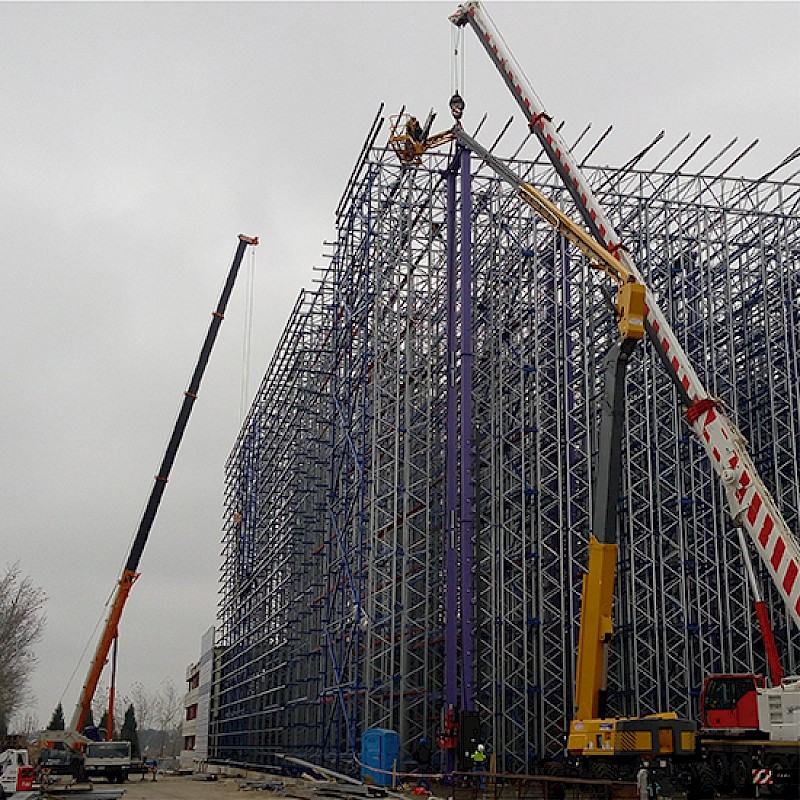
26 meters high, 9 stacker cranes, and more than 31,000 pallets—all without gaining a single extra square meter.
Samseng entrusted us with building, right in the heart of its own plant, a smart, self-supporting warehouse capable of connecting production and shipping without wasting a single second along the way.
Growing demand was forcing Papelera Samseng to move, store, and ship ever-increasing volumes without having the physical space to do so.
Samseng saw the demand growing, but faced a very real physical obstacle: there was no space to store, move, and ship the volume of product that the business was beginning to require.
Papelera Samseng
Papelera Samseng is one of the three largest tissue paper manufacturers in Argentina, with an annual production of about 50,000 metric tons of tissue paper—for bathroom, kitchen, and general-purpose use. Its plant, one of the most modern in the industry in the country, is located in the industrial district of Buenos Aires.
The Challenge
Samseng's business plan called for growth, and that growth ran head-on into a very specific limitation: there was no physical space to expand. The company needed to make a leap forward in productivity, flexibility, and storage capacity to meet market demand, but expanding sideways was not an option.

Growing Order Volume

Lack of physical space

Connecting Production and Logistics

The Need for Greater Productivity and Flexibility
The solution
from ULMA
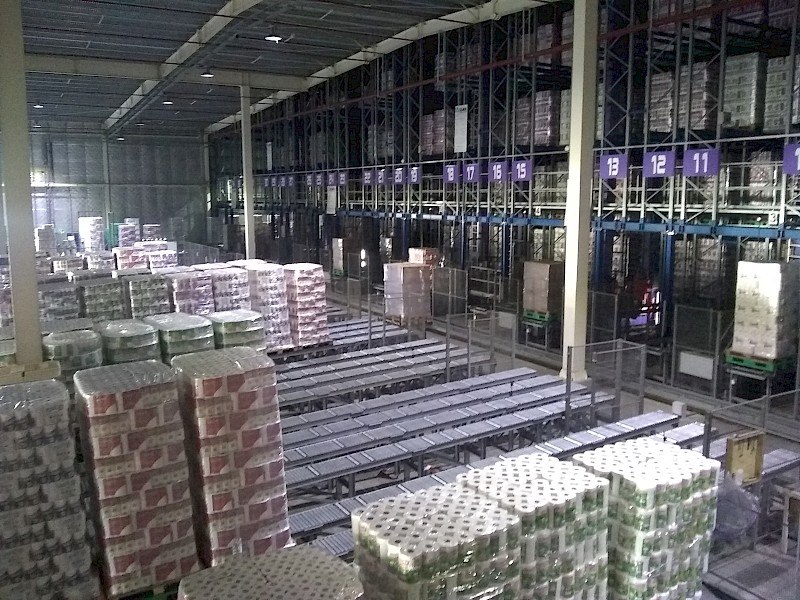
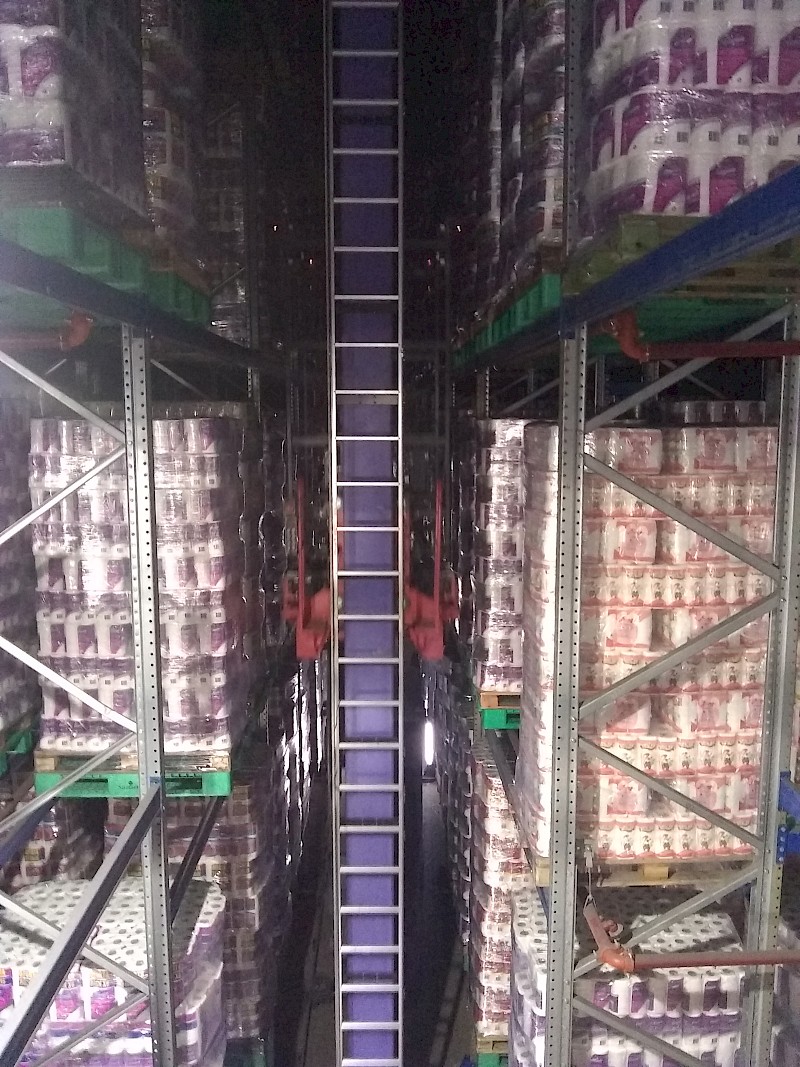
We went up: we built a 26-meter-tall self-supporting smart warehouse, equipped with 9 double-deck stacker cranes (unit load) and capacity for more than 31,000 pallets.
The system receives products from two different entrances. On one side, a circuit of 6 high-performance STV (Sorting Transfer Vehicle) units connects the production line to the warehouse, sorting and picking items at multiple stations. On the other hand, raw materials enter directly through the rear of the warehouse, also handled by the stacker cranes. In fact, two of them handle both incoming and outgoing shipments on both sides, giving the system a level of flexibility that few conventional facilities can offer.
The entire system is controlled by our warehouse management software (WMS), which orchestrates every movement to maximize overall efficiency. The circuit extends to the picking area, where a Pick-to-Light system greatly simplifies order fulfillment, whether for single-item pallets or multi-order pallets.
The result
The change is evident in day-to-day operations. “The new logistics center is already enabling systematic automated storage and efficient product shipping, with a drastic reduction in delivery errors,” summarizes Carlos González, Project Director at Papelera Samseng. “We’re shipping large volumes of products to customers and delivering them on time. The cultural shift brought about by the new work methodology is something we’re still adjusting to, but I can say that we’re already benefiting from the improved organization and quality of deliveries across our entire product line.”
From our side, Alex Gutierrez, CEO of LATAM at ULMA Handling Systems, explains it this way: “The storage system, equipped with nine double-deck stacker cranes and the STV circuit,allows us to meet both the inbound flow needs of the production lines and the high shipping demand at Papelera Samseng, all controlled by the intelligence of the Warehouse Management Software to achieve the highest overall performance.”

Large volumes shipped and delivered on time
More than 31,000 pallets in a 26-meter-tall vertical warehouse
Production and Warehouse Connected via STVs

Eliminating Delivery Errors
Testimonial
"The new logistics center is already enabling systematic automated storage and efficient shipping of products, with a drastic reduction in delivery errors."
Carlos González
Project Director at Papelera Samseng
"A few years ago, we realized that future demand would present us with a major challenge related to our ability to move, store, and ship a volume of products that was already growing. We lacked physical space and considered investing in technology, and the suggestion of a globally integrated solution seemed to be the best approach."
"We are shipping large volumes of products to customers and delivering them on time. The cultural shift brought about by the new work methodology is something we are still adjusting to, but I can say that we are already reaping the benefits of improved organization and delivery quality across our entire product line."